Education
5 min read
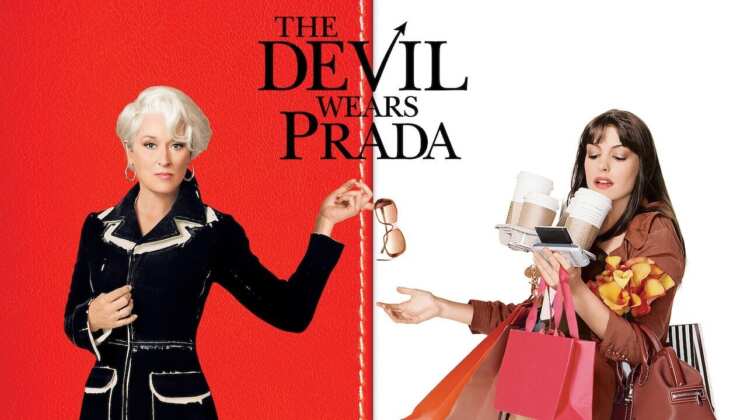
Today, we're talking about writing of Aline Brosh McKenna in 2006's The Devil Wears Prada. On it's surface, it's a film with strong, memorable characters that steal the show scene after scene. Whether it's the iconic Meryl Streep expressing incompetence and dissatisfaction with a single look or the constant eye rolls from Emily Blunt with every fashion tragedy.
The Devil Wears Prada has been memorable for 20 years. But quietly hiding underneath those great performances is a sneaky framework for testing a character's worldview. It begins with a flash forward that frames the entire journey. Then a world that is presented through the behavior of others instead of mundane exposition. An Interview that is about proving you understand the game that is being played, not just getting the job. And finally, a deceptively simple object that marks the moment a character begins to compromise who they are.
From the opening lines of the script we can see that the script is actually vastly different from the finished film. In the finished film, we see a montage of our main character, Andy, getting ready in the morning juxtaposed with how other girls get ready in the fashion world. The imagery is showing how different Andy is from the fashion world.
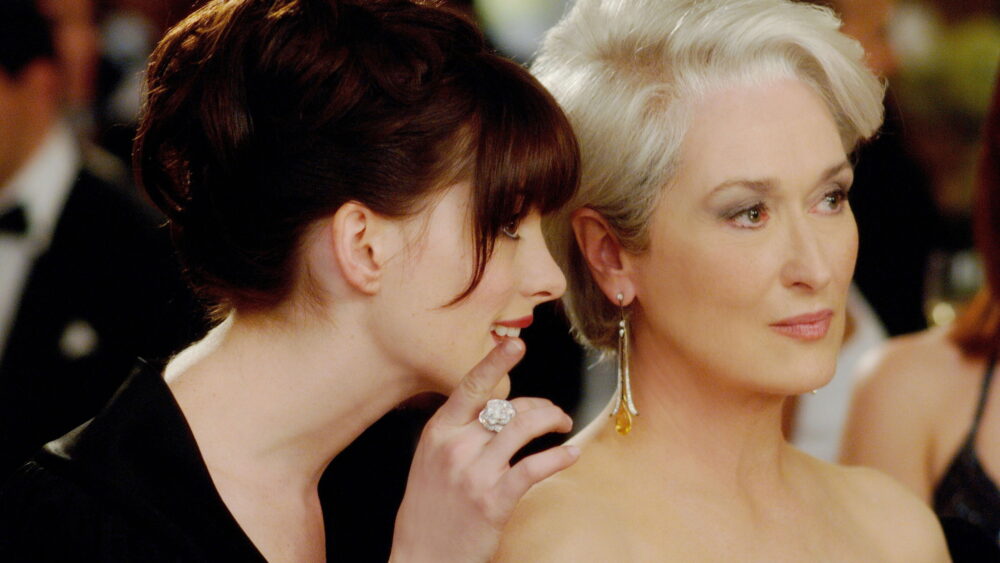
But in the script, our first scene is actually a flash forward of our main character at an elite Paris fashion dinner. Notice how we also get the introduction of two essential characters to our story, Miranda and Nigel. Nigel introduces Miranda Priestly as a legendary and untouchable figure and we read "Some of MIRANDA'S light spills onto ANDY". Until we flash back six months earlier to a bumbling Andy lost with paper directions and dressed the opposite of someone at an exclusive fashion week dinner.
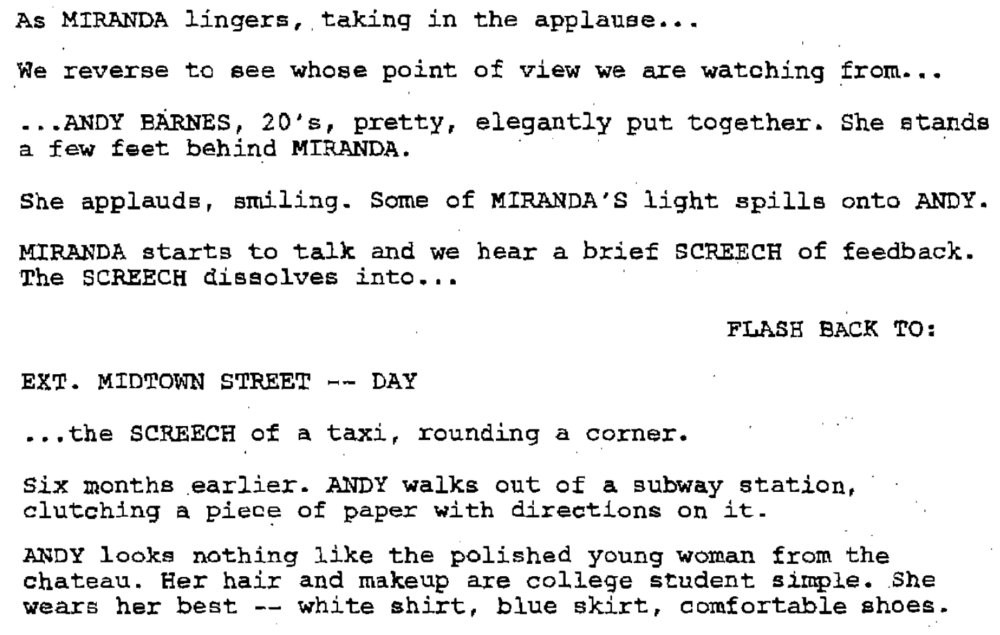
When a writer begins with a flash forward and eliminates the mystery of a character's final destination, they instead want you to focus on how they get their. By removing the wonder of the end, it creates a stark contrast for the reader to wonder: How is this bumbling idiot gonna turn into that? What sacrifices must she make to fit into that world if this is where she starts? What is she getting herself into?
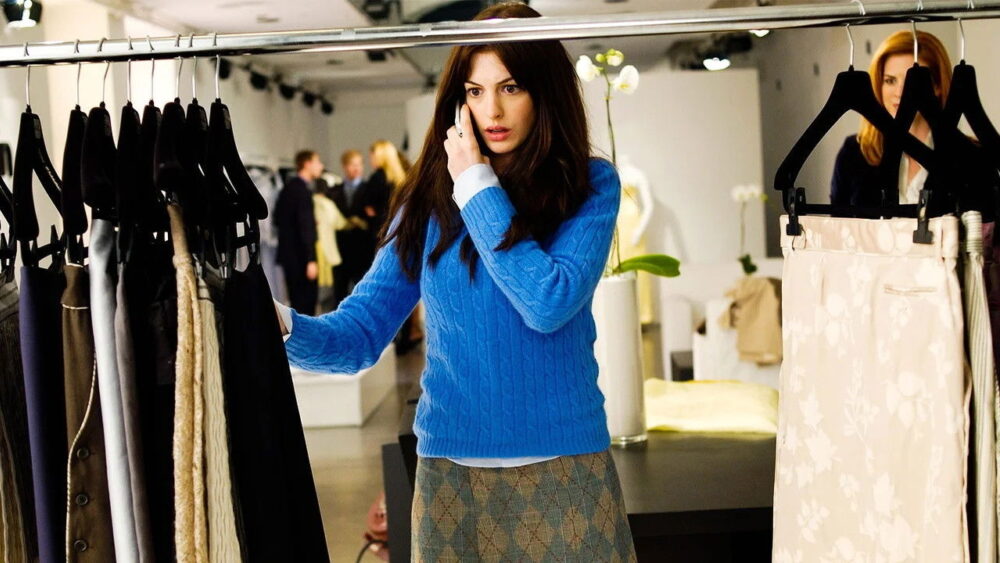
When Miranda arrives unexpectedly, Emily panics and triggers a rapid, office-wide scramble. Nigel calls everyone to prepare:
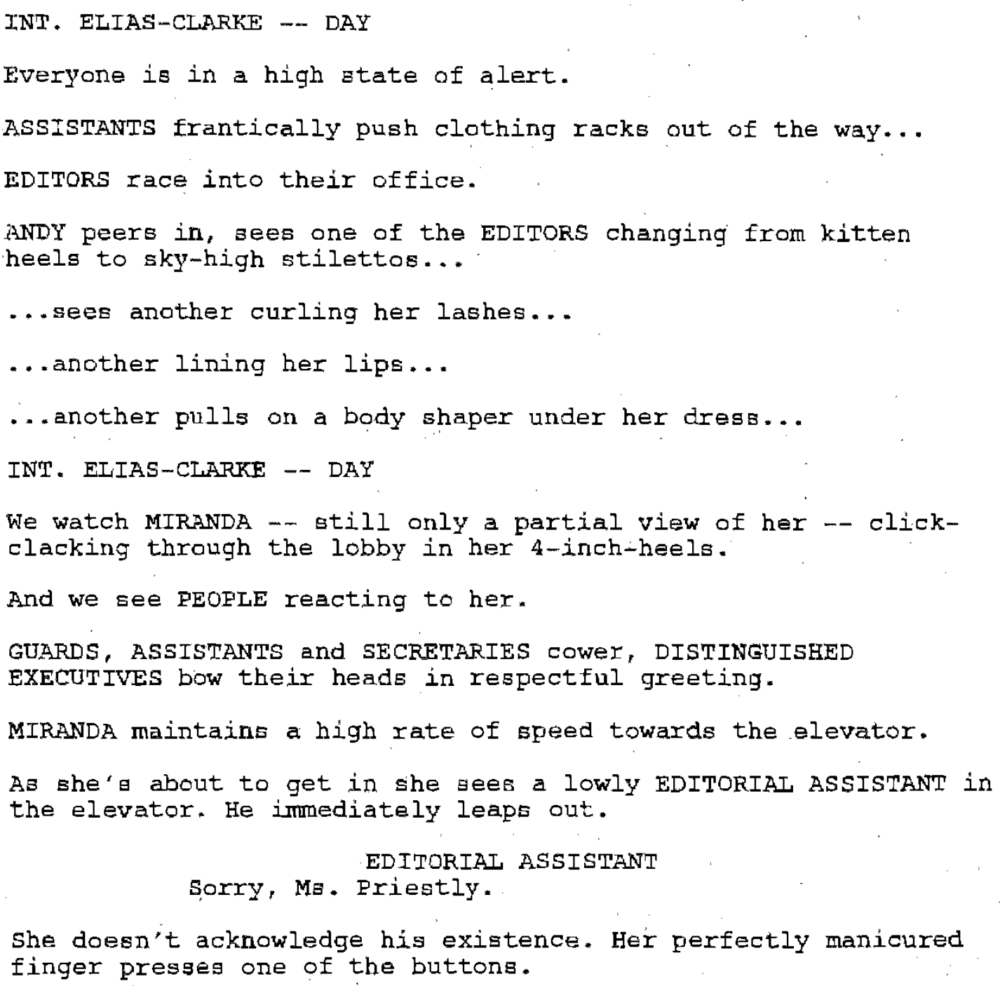
Before Andy even interviews, the script shows us how power works here. When Miranda arrives, it triggers an entire system. Assistants begin to panic. Editors scramble away. People physically move out of Miranda's way. The entire behavior pattern of the world shifts in an instant. By the time Andy meets Miranda, the reader learns that the world doesn't adapt to you, you adapt to the world. Which makes Andy's initial confidence feel very, very naive.
During the interview, Miranda dismisses the formality of an interview by ignoring Andy's resume. She cuts straight to the core question: Why are you here? Andy, unsettled, drops her prepared answers and answers truthfully. This exposes the power imbalance and the real test of the scene.
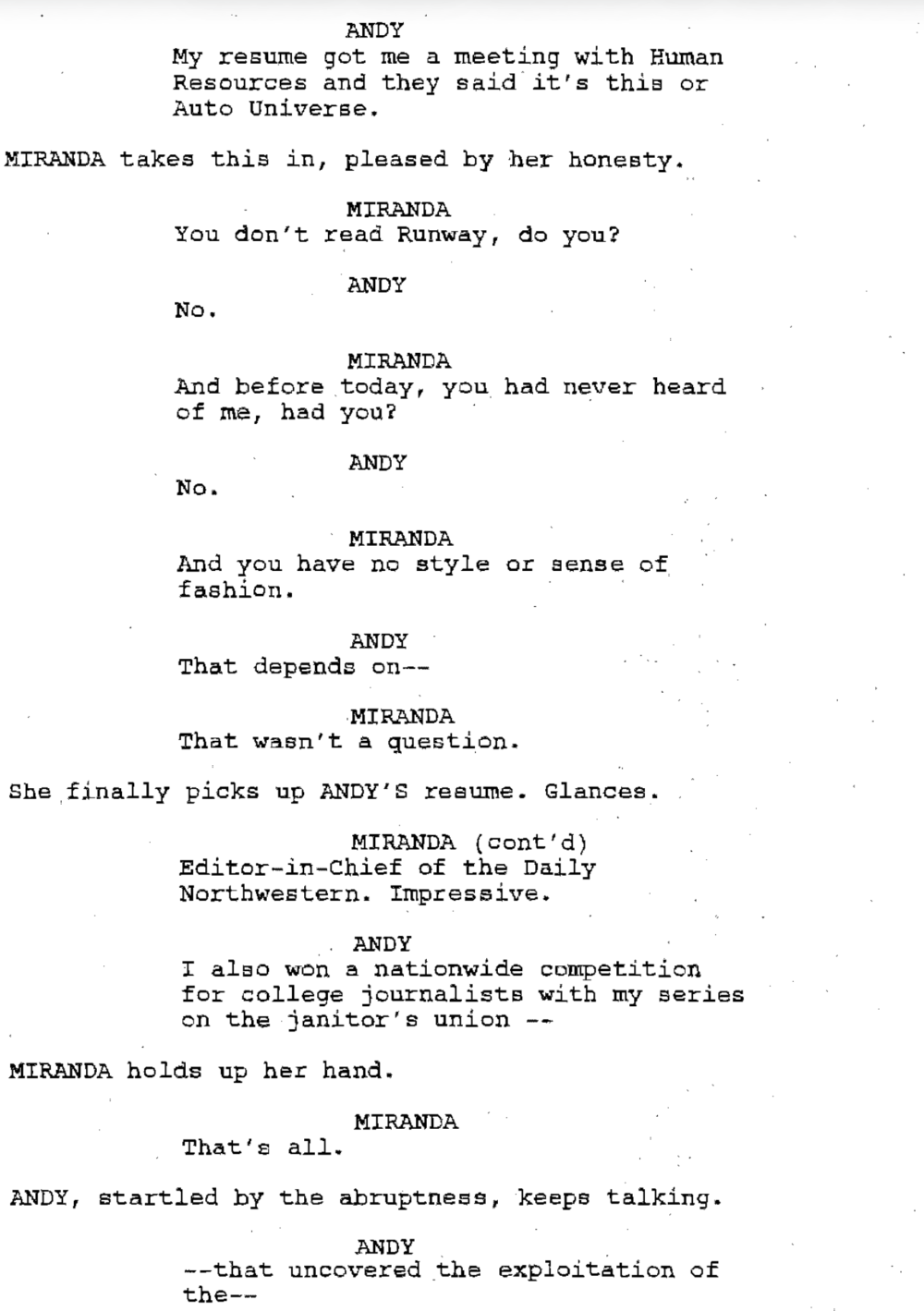
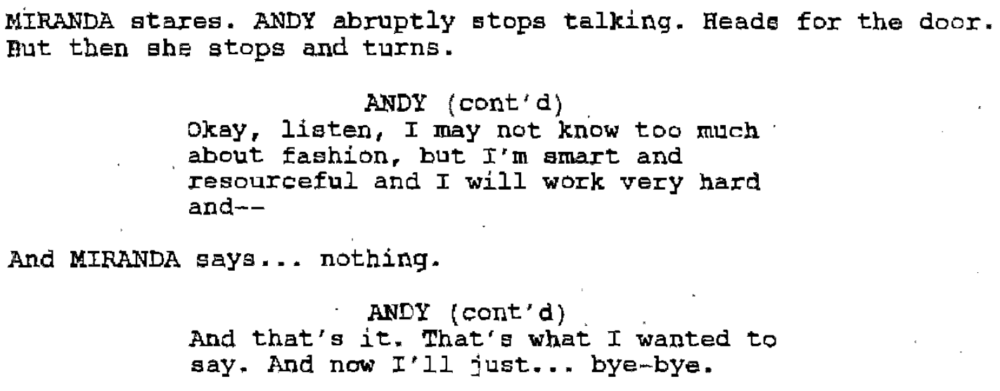
This scene is built on misalignment. Andy values journalism, truth and substance. Miranda values taste and honesty. She doesn't even bother with Andy's resume. Instead, she challenges Andy's character. Andy doesn't read the magazine, she doesn't have style, and she doesn't fit in. But the test isn't about Andy's qualifications. Miranda is testing whether she understands the rules of the game she is entering.
Andy doesn't understand. But she's willing to try anyway. Miranda, like the structure of this scene, isn't trying to test Andy's skills. Miranda wants to test her worldview. That's why she gets hired.
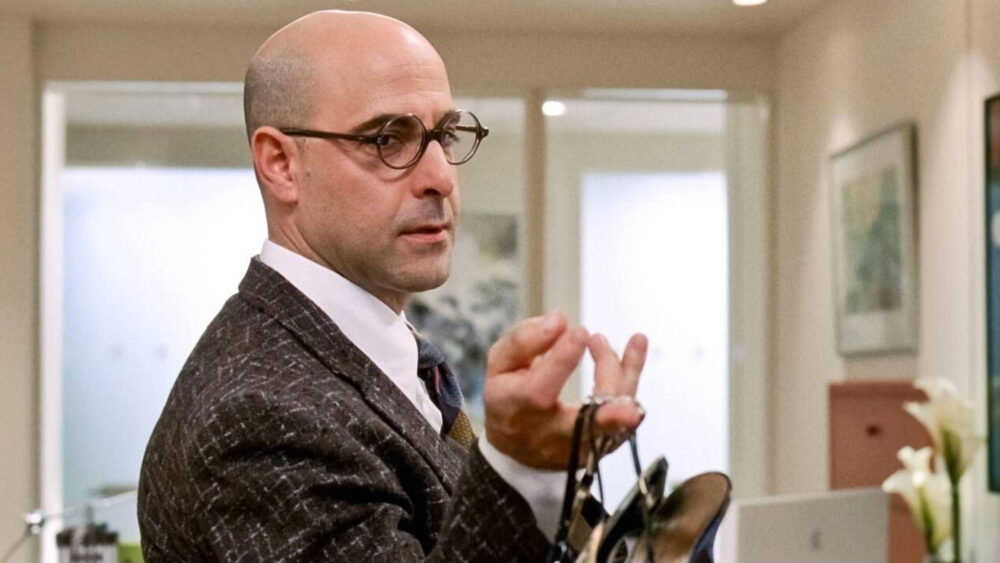
Nigel sizes up Andy's outdated shoes and jokes about them. Shortly after, he returns with a pair of Jimmy Choo heels. Andy refuses the call and downplays the need to change her look but the shoes remain on her desk. They act as an invite to step into the world she is resisting.
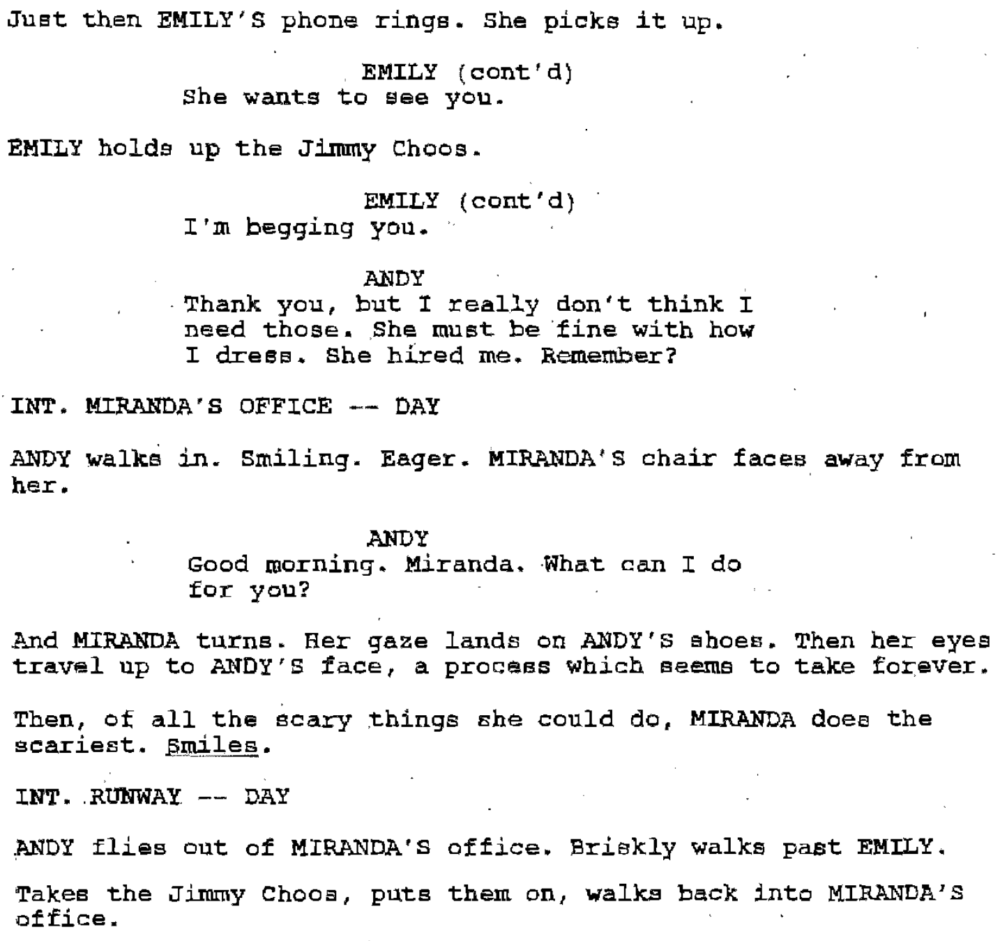

Emily holds up the shoes, begging Andy to enter the new world before her. Andy gives one last refusal and enters the world without them. Miranda eyes Andy up and down, landing on her shoes. Miranda's smile actually shows disapproval so intensely intimidating that Andy rushes out of the office, puts on the designer heels and thus finally answers the call. Emily, a gatekeeper of the new world throws Andy's symbol of the old world in the literal trash.
The incredible efficiency of the writing here to give one last example as the refusal of the call before stepping into the new world is so good. And to do it through something as simple as a pair of designer shoes but still perfectly symbolic of the new fashion world Andy is entering is a masterclass. Let's all take note.
And that's all just the first 20 pages. From here, Andy is repeatedly challenges at the act turns and throughout the second act with choices again and again. Will she hold her morals and the world she once knew or will she let the system of the high stakes fashion world slowly erode them until she is a shell of who she one was? In the end, will she continue on and complete the transformation or break free? It's a theme that rings true in all forms of daily life, not just the fashion world.
Garrett Tripp
Education
5 min read