

Education
5 min read

Have you heard? It's Zendaya's year! She's got a whopping FIVE high profile projects being released this year: The Drama, Dune: Part Three, Spider-Man: Brand New Day, The Odyssey and the final season of Euphoria. Listen, we're not here to talk about the mixed to negative reactions to season three or that scene everyone is talking about from the first episode of the new season.
Today, I want to take a look at my favorite episode of Euphoria: Trouble Don't Always Last (2020). It was one of the two pandemic episodes that Euphoria released in 2020.
In March of 2020, Euphoria Season 2 was about to begin filming when the world shutdown. In response to the unknown elements of pandemic at the time, Sam Levinson began writing with strict constraints to limit the cast and crew needed to pull off two episodes of Euphoria and his other Zendaya project, Malcom & Marie. I personally think Sam Levinson should just write great dialogue driven two-handers for eternity, but that's just me.
In Trouble Don't Always Last, Levinson constructs a 40-page diner conversation that dissects Rue's state of mind as she struggles with addiction. Rue spends the conversation not expressing what she wants, but what she is trying to avoid. The result of Levinson's inworld experiment is a slow, controlled stripping away of defense mechanisms until her truth becomes unavoidable. Rue begins the episode managing the perception of her sobriety to her AA sponsor Ali. But by the end, she admits that she isn't just struggling with her sobriety but with her desire to take her own life.
Line by line, the dialogue moves through four phases: denial, honesty, confrontation, and emotional break. Each one increases the pressure of the conversation until the only thing left is the truth.
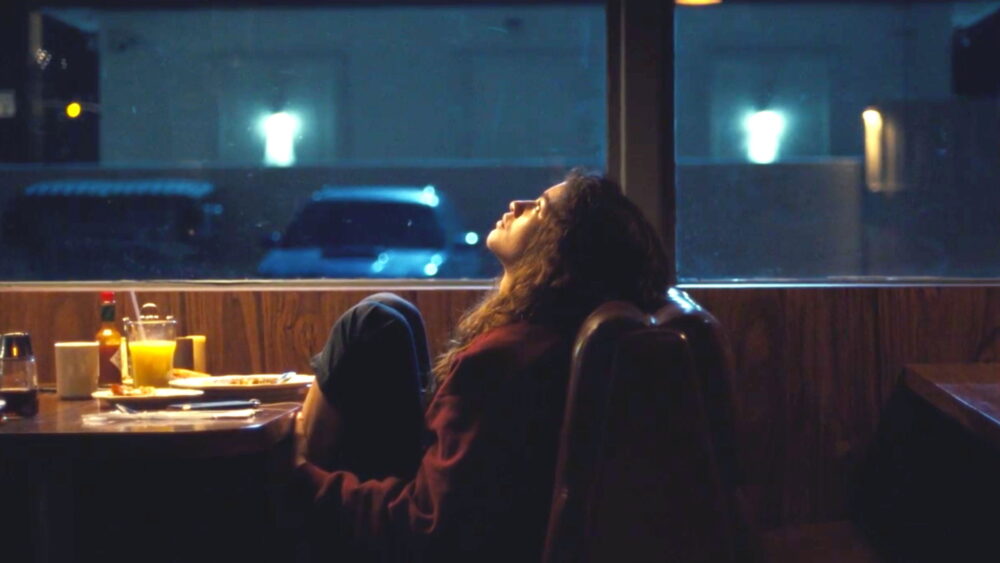
The episode begins with Rue waking up in New York with Jules as they share affection and Rue supports her before a big presentation. She sends Jules off then grabs some pills, and snorts them to get high. It feels as if she is balancing life, love, and her drug habit. But it's not real. It's a fantasy of what Rue imagines her life could look like if she went with Jules. In reality, she's alone in a diner bathroom, getting high before meeting her sponsor.
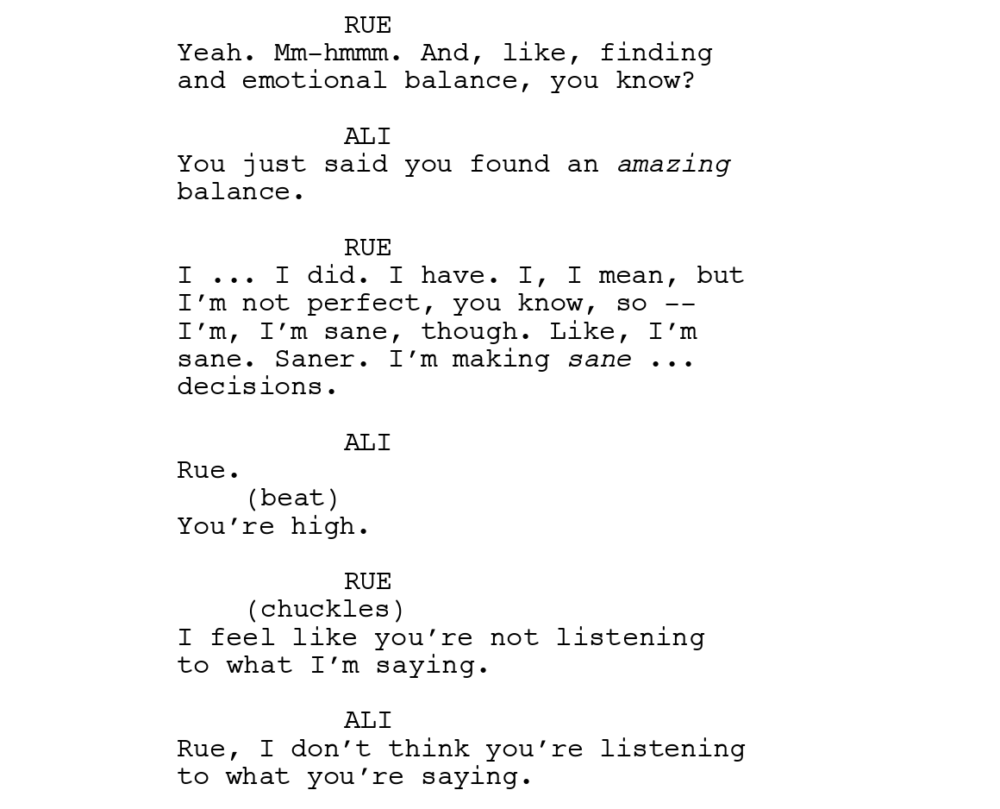
Rue opens the scene trying to control the narrative. She's talking about how good she's doing and how great life is but she's just talking in circles. She's saying the same things over and over again to try to justify, reframe, minimize, and then repeat. But Ali, an ex-crack head that is 12 years sober can see the tells from a mile away. He undercuts her sunshine and rainbows. Denial in our characters doesn't have to simply be them saying no over and over again. It's much more interesting to show a character's denial by revealing the truth they are trying to make a reality. It allows the reader to question why the character might do something like that. It asks where decision coming from.
It takes some warming up in the conversation. But eventually Rue stops trying to sound okay. She admits she's just trying to survive.
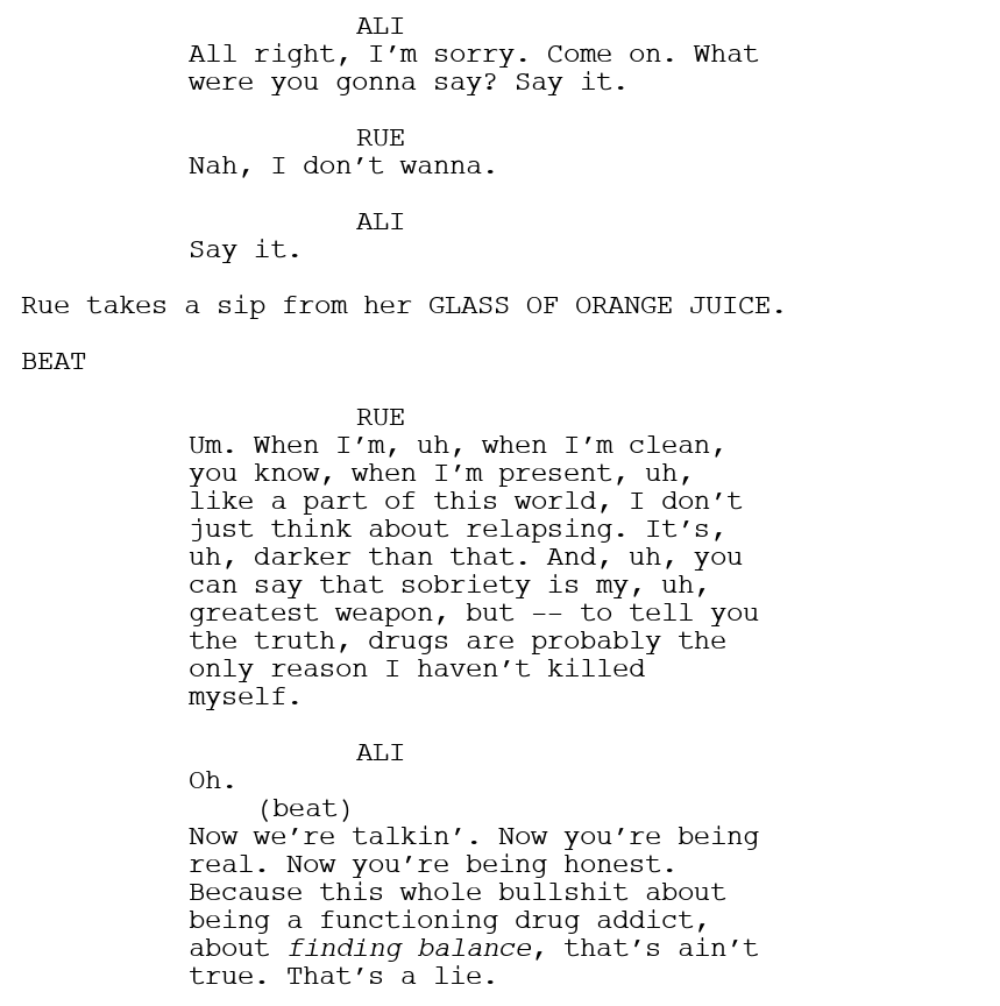
Ali doesn't let her move past it and makes her say the thing she's avoiding. Honesty is what he has been trying to direct this conversation to from the beginning. She goes from denial, to insisting that she's okay, to confessing that she needs drugs to survive, to admission that she doesn't plan to survive. As a writer, it can feel unmotivated for a character to break from telling lies to suddenly telling the truth. But here, we got to watch honesty be treated like a process. By arriving at it slowly, when Rue has no other options, it makes it feel earned.
After revealing her honest feelings, she becomes pedantic. She blames anything but herself. It's a reaction to the honesty. Ali tries to help Rue process her belief that "drugs are probably the only reason I haven't killed myself" by connecting it to a higher power. Rue isn't buying it.
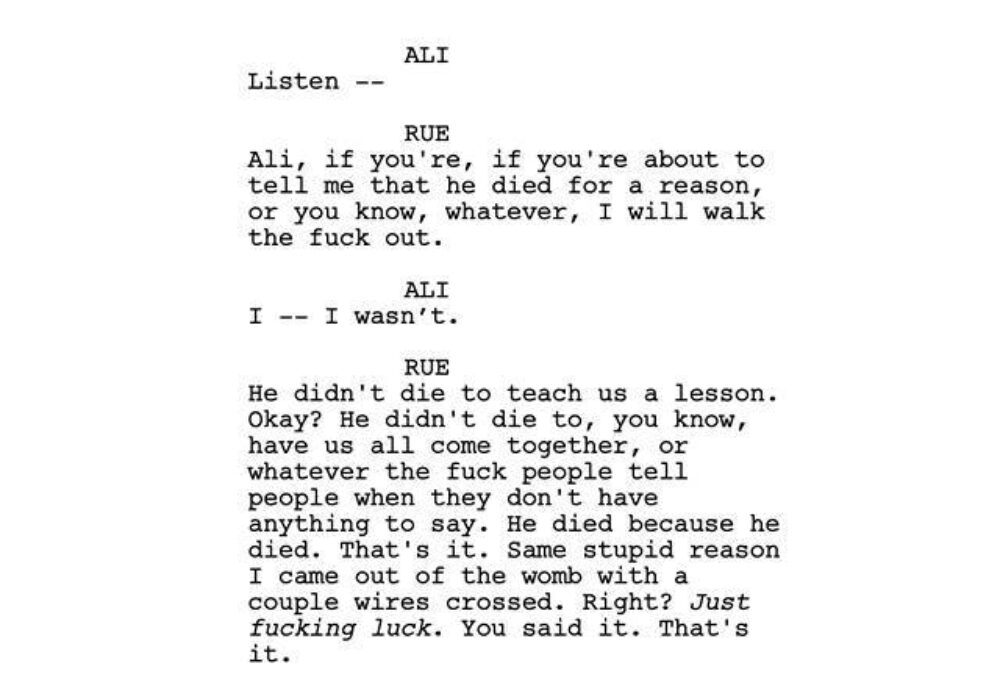
Rue's confrontations aren't to solve anything. She believes that people leave, promises are lies, there's no such thing as purpose, and pain is arbitrary. She hates the worldview Ali is presenting. Since she can't hold the pain herself, she tries to put it on Jules.
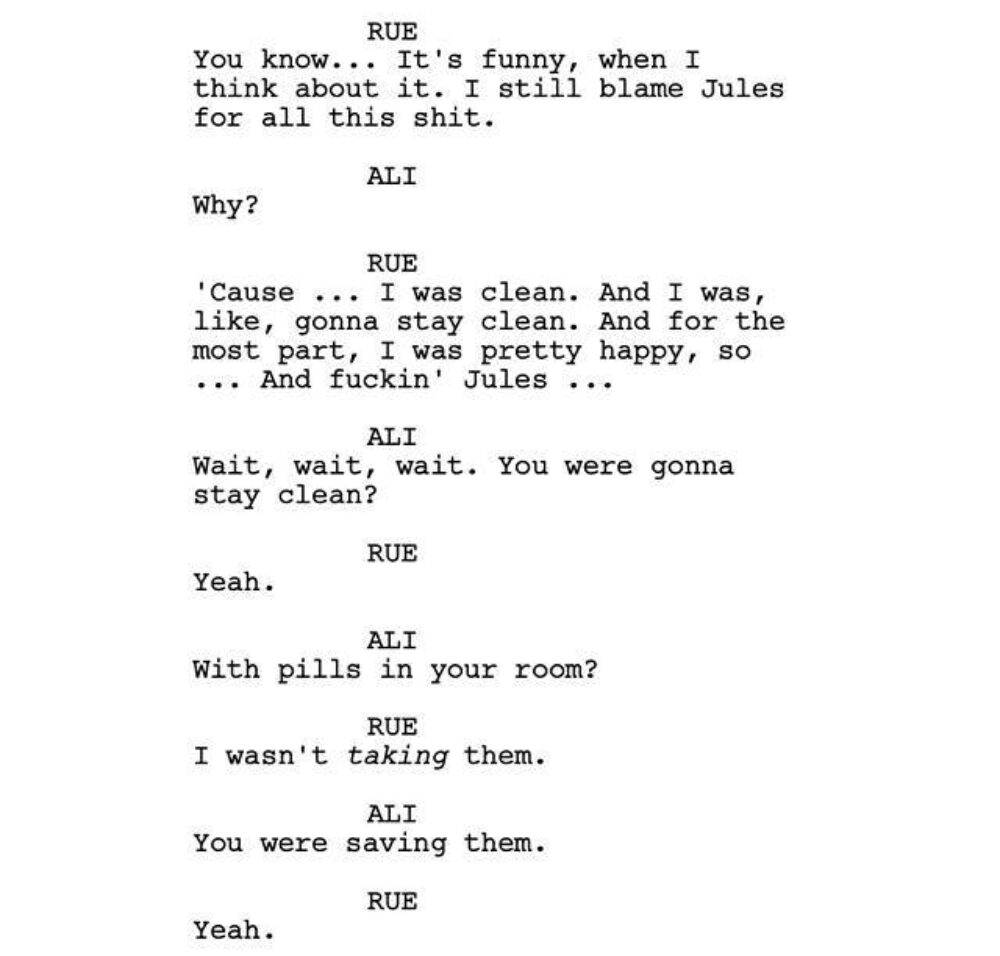
Of course, Ali isn't having any of that. He calls her out when she blames Jules for her failed sobriety. Again, he tries to move aside her confrontation and hold a mirror to Rue. But Rue is just trying to delay the emotional break that is coming. As long as she is arguing and blaming and rejecting, she doesn't have to face herself or her truth.
The break happens only after denial, honesty, and confrontation fail. In the emotional break, it becomes clear that each was a attempt to buy herself time. Suddenly, the episode reframes itself. She isn't entertaining the idea of trying because she's given up on the idea of wanting to be here at all.
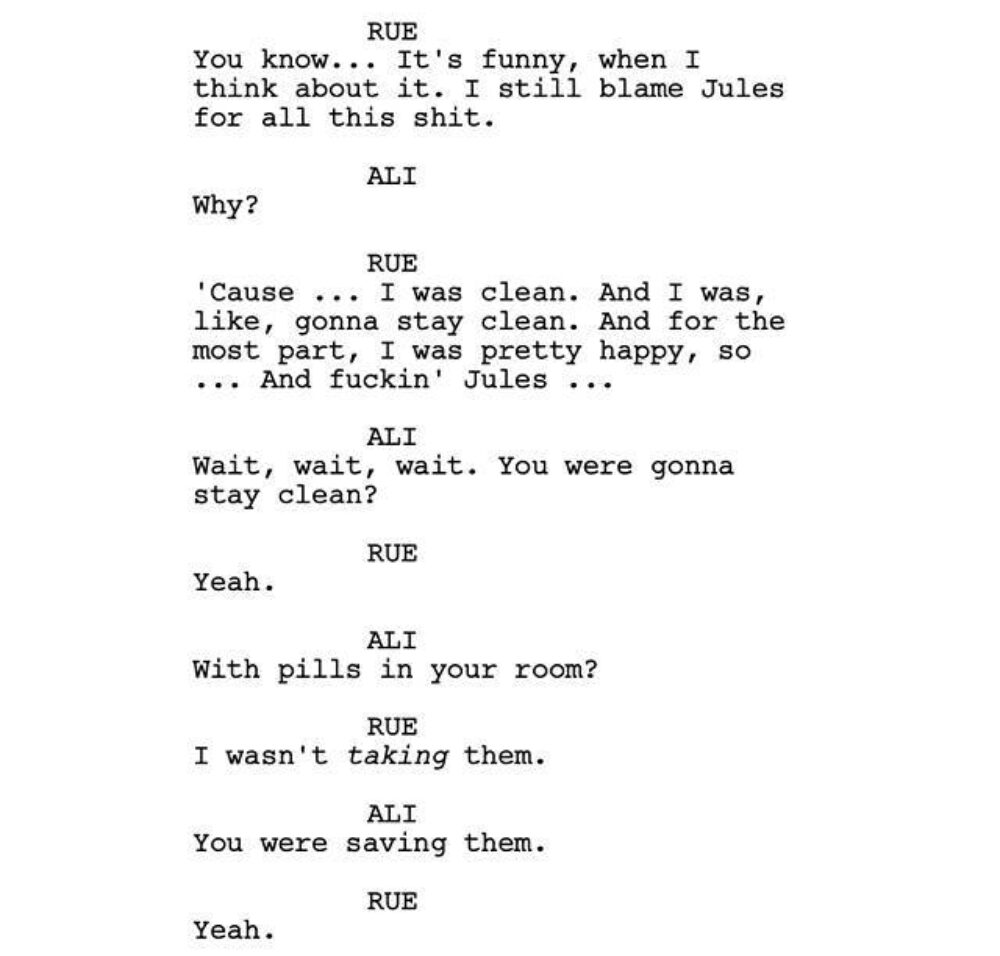
As a writer, I love the contradiction here. She says she loves talking to Ali but that she doesn't plan to be here that long. It's heartbreaking because if she isn't here for long, then she wont be able to talk to Ali. Rue understands the right things. She just no longer believes she can be the person who continues to live it.
She doesn't believe she's someone worth saving.

An emotional break isn't when a character has the biggest feelings. It comes when a character finally stops being able to hide what they believe about themselves.
Writing a dialogue heavy episode like this can be a real challenge. Where this episode excels is the design of pressure. Each of the phases we discussed served a function:
As writer's, its easy to try to build each scene around what happens. Two characters talk about addiction at a diner. But what propels this scene is a truth a character is trying to avoid at all costs. Rue spends all forty pages trying to convince Ali that she's okay. It ends with her admitting that she's not, and in the worse way.
Force your characters to say the only thing that matters to them.
Garrett Tripp
Education
6 min read